AS 4678:2002 and AS 2159:2009 set the benchmark for pile design across Australia, but in Cairns the tropical weathering profile adds a layer of complexity that generic designs simply overlook. The city sits on a coastal plain between the Great Dividing Range escarpment and Trinity Inlet, where thick sequences of alluvial silts, soft estuarine clays and deeply weathered residual soils dominate the subsurface. Groundwater sits barely a metre below the surface across much of the inner suburbs and the seasonal monsoon drives rapid changes in soil moisture that affect shaft friction predictions. A pile that works in Brisbane will not necessarily perform here without local calibration. Our design approach starts with a proper site investigation to capture SPT N-values through the weathered zone, followed by CPT profiling where continuous stratigraphy is needed to pick the pile toe level with confidence.
Deep weathering in the Cairns region can extend 20 metres below the surface, making pile toe selection a decision driven by residual soil strength rather than shallow refusal.
Service characteristics in Cairns
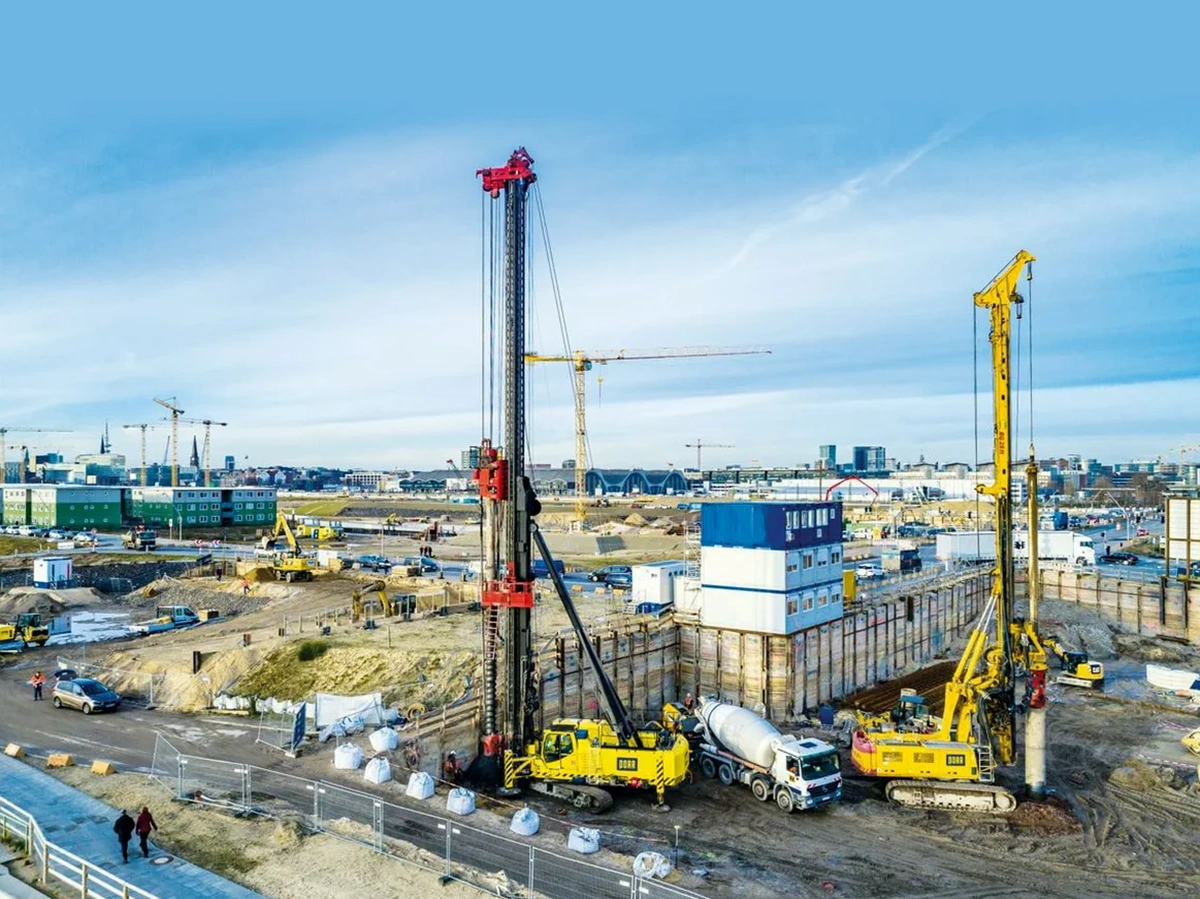
Field demonstration
Typical technical challenges in Cairns
The most frequent failure mode we encounter in remedial assessments is pile groups designed with shaft adhesion values taken from generic charts that ignore the influence of tropical residual soils. In the Cairns region, deeply weathered metasediments and granite produce a structured soil fabric with relic joints and variable cementation; this material can exhibit apparent cohesion of over 100 kPa in its natural moisture state, dropping to less than 30 kPa when saturated and remoulded during installation. A contractor who skips a pre-production pile test assumes those high peak strengths are available for service, and that assumption leads to settlement cracks appearing within the first two wet seasons. Slope stability around the pile cap becomes another overlooked factor on hillside blocks in Whitfield and Edge Hill, where seasonal groundwater mounding behind the foundation can trigger creep and lateral soil movement that imposes bending moments the piles were never designed to carry.
Our services
Our piling design scope covers both the geotechnical and structural interface so the contractor receives a coordinated package ready for construction. Each job includes a site-specific ground model, pile load calculations, reinforcement schedules and construction specifications aligned with AS 2159.
Bored pile design
Cast-in-situ piles designed for shaft friction in residual soil profiles, with full reinforcement cages detailed per AS 3600 and concrete mix specified for sulfate-rich groundwater common in estuarine areas.
Driven pile specification
Selection of pile section, hammer energy and driving criteria for end-bearing piles founded on fresh rock below the weathered zone, including wave equation analysis to confirm driveability.
Pile group analysis
Settlement and interaction analysis for groups of 2 to 25 piles, checking block failure mechanisms in layered soil profiles and calculating group efficiency factors for cohesive and granular layers.
Q&A
How deep do piles typically need to go in Cairns?
Pile depths vary from 8 metres for lightly loaded residential piles socketed into residual clay to over 25 metres for commercial structures that need to bypass the entire weathered profile and found on fresh rock. The depth is controlled by the interface between residual soil and bedrock, which can be highly irregular across short distances in the Cairns foothills.
What does pile foundation design cost for a typical Cairns project?
For a standard residential or light commercial project, pile foundation design fees range from AU$2,800 to AU$10,700 depending on the number of piles, the complexity of the ground model and whether load testing is required. A site-specific proposal is always provided after reviewing the borehole logs and structural loading schedule.
Can piles be installed during the wet season in North Queensland?
Yes, but the construction method must be adapted. Bored piles require temporary casing through the softened surface layers and the concrete pour must follow immediately after cleaning the base to prevent softening of the founding stratum. Driven piles are less affected by seasonal moisture but access tracks may need stabilisation to support the piling rig and crane.