Tunnel design in Cairns demands a geotechnical approach that accounts for the region’s unique tropical residual soils and elevated water tables, as defined under AS 1726. The coastal plain between the Great Dividing Range and the Coral Sea is underlain by deeply weathered metamorphic rocks and extensive alluvial clays that exhibit low shear strength and high compressibility—conditions where a standard site investigation falls short. Our team applies advanced In-Situ and laboratory programs to characterise these soft ground units, delivering the deformation and stability parameters required for mechanised or sequential excavation methods. Because Cairns sits in a cyclone-prone zone classified under AS/NZS 1170 Wind Region C, the interaction between atmospheric loading, groundwater fluctuation, and tunnel lining behaviour must also be modelled at the design stage. We integrate CPT testing to capture continuous stratigraphic profiles and seismic refraction surveys to define bedrock depth along the alignment, ensuring no surprises during construction.
Soft ground tunnelling in Cairns is less about rock strength and more about managing water, clay sensitivity, and the long-term settlement of compressible alluvium under cyclic tropical loads.
Service characteristics in Cairns
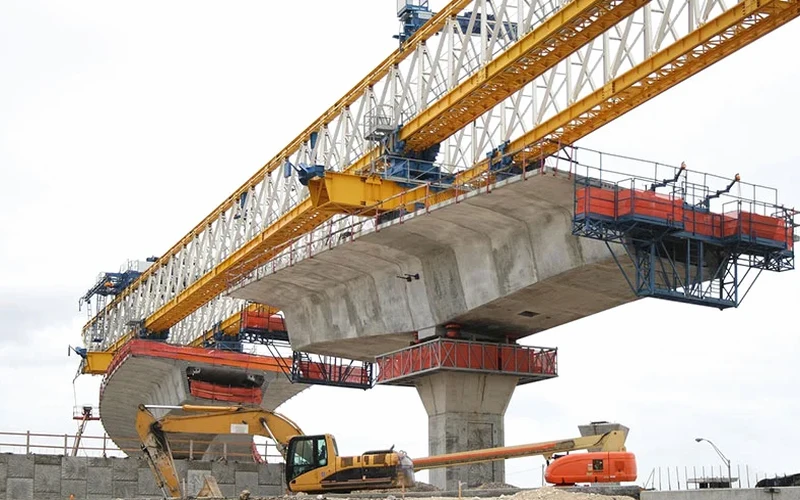
Field demonstration
Typical technical challenges in Cairns
A shallow drainage tunnel project in the Cairns CBD encountered a lens of highly sensitive marine clay at just six metres depth that had not been identified by the preliminary desk study. The face became unstable within hours of opening, causing overbreak that propagated to the surface and damaged a section of kerb on a major arterial road. The root cause was a combination of pore pressure build-up from the previous week’s heavy rainfall and a laboratory program that had underestimated the clay’s sensitivity because samples were trimmed too aggressively. We redesigned the investigation to include field vane shear testing and pore pressure dissipation monitoring, which revealed a layer with a remoulded strength barely 15% of its peak value. The experience reshaped how we approach soft ground tunnels in Cairns: every borehole must now include piezometer installations that capture the seasonal high, and laboratory testing must preserve sample integrity from the field to the triaxial cell.
Our services
Our geotechnical analysis for soft soil tunnels in Cairns is structured around three core service packages that align with the typical project lifecycle, from feasibility to detailed design and construction monitoring:
Tunnel Alignment Geophysics
We combine MASW and seismic refraction surveys to map the bedrock interface and detect buried paleochannels that often control groundwater inflow along the tunnel axis in the coastal plain.
Advanced Laboratory Testing
A NATA-accredited suite covering triaxial (CIU, CAU), oedometer consolidation, ring shear for residual strength, and permeability testing, all calibrated to the high moisture content of Cairns clays.
Construction-Phase Monitoring
Instrumentation plans including inclinometers, piezometers, and surface settlement arrays, designed to track ground response during excavation and validate the observational method under AS 1726.
Q&A
What is the typical cost range for a geotechnical investigation for a soft soil tunnel in Cairns?
Based on project length and investigation density, a compliant soft soil tunnel geotechnical investigation in Cairns typically ranges from AU$5.600 for a targeted supplementary campaign to AU$27.530 for a comprehensive program covering deep boreholes, geophysics, laboratory testing, and instrumentation installation. The final scope depends on the tunnel depth, alignment length, and whether marine clays are encountered.
What makes Cairns soft soils particularly challenging for tunnelling?
The combination of high rainfall, shallow groundwater, and the presence of sensitive estuarine clays with remoulded strengths far below peak values creates a risk profile that is uncommon in drier Australian cities. Seasonal water table swings of several metres can alter face stability conditions rapidly, requiring a drainage and monitoring strategy tailored to the monsoon cycle.
Which laboratory tests are essential for soft ground tunnel design in this region?
Beyond index testing, we specify consolidated-undrained triaxial tests (AS 1289) to capture effective stress parameters, oedometer consolidation tests for settlement prediction, and permeability tests under falling-head conditions for realistic seepage modelling. Ring shear testing is added where the clay sensitivity suggests a risk of progressive failure.
How do you account for cyclone loading in a tunnel geotechnical analysis?
Cyclone loading is addressed through a combination of AS/NZS 1170.2 wind actions transmitted via surface structures and the pore pressure response in the ground. We model the groundwater regime under extreme rainfall scenarios and assess the short-term undrained response of the tunnel lining, ensuring the structural design accounts for the transient load case unique to northern Queensland.