A recent cut on a hillside near Whitfield Road exposed deeply weathered schist that made a standard retaining wall unworkable. The slope angle exceeded 60 degrees. We had to go deeper. That job called for a permanent passive anchor system drilled into the competent rock behind the weathered zone, locked off at 450 kN. Cairns ground conditions shift fast over short distances, from residual clays to fresh granite. Moisture from the wet tropics accelerates corrosion risk in steel tendons. Our anchor designs account for this from day one. Every system is specified with double corrosion protection and tested to meet AS 4678 requirements. Before installing anchors, we often verify the rock mass with a test pit to confirm the weathering profile, and in saturated soils we specify a CPT test to define the lateral stress profile for grout-to-ground bond calculations.
In Cairns, anchor bond stress can drop 30% after heavy rain if the grout zone is not sealed correctly.
Service characteristics in Cairns
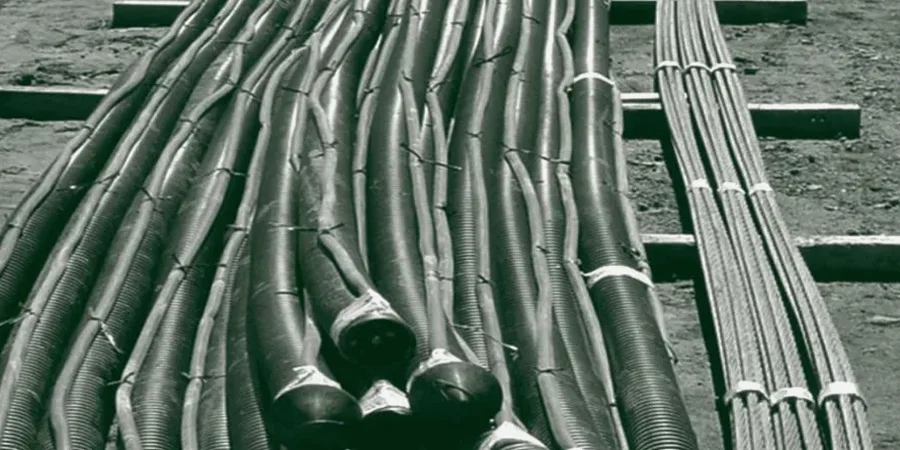
Typical technical challenges in Cairns
The most expensive mistake we see is a contractor installing passive anchors where active lock-off was needed. The wall tilts forward. Cracks appear at the top of the excavation. The cost to retrofit a pre-stressing system is triple the original install. Another common failure is underestimating the aggressiveness of Cairns groundwater. A single-corrosion-protection bar anchor in acidic residual soil can lose 30% of its cross-section in five years. That is a hidden danger that does not show up until a proof test fails. Anchors installed without proper water testing during drilling risk grout washout during the next tropical downpour. A grout that does not set in a saturated zone provides zero capacity. The only fix is redrilling. We specify on-site suitability testing for every anchor zone and document the entire installation sequence.
Our services
Anchor design in Cairns requires a complete package from investigation through to long-term monitoring. Our services cover the full lifecycle.
Active anchor design
Pre-stressed anchors for excavation support and basement walls in Cairns CBD. Immediate load transfer with lift-off testing to confirm lock-off force.
Passive anchor design
Reaction anchors for permanent slope stabilization and landslide repair. Designed to mobilize resistance with controlled ground deformation.
On-site suitability testing
We run proof load tests and extended creep tests to confirm bond stress assumptions in Cairns-specific weathered rock and residual soils.
Long-term monitoring
Load cell installation and periodic lift-off checks to track anchor force over time, critical in the wet-dry cycles of Far North Queensland.
Q&A
What is the difference between active and passive ground anchors?
Active anchors are tensioned immediately after installation to apply a pre-calculated force to the structure. They prevent any movement before excavation continues. Passive anchors are not pre-stressed. They develop resistance only after the ground deforms slightly, making them suitable for permanent slope stabilization where some displacement is acceptable.
How much does anchor design and testing cost in Cairns?
A complete anchor design package including investigation, design, and on-site testing typically falls between AU$1,610 and AU$6,020. The final cost depends on the number of anchors, access conditions, and the extent of corrosion protection required for the specific ground conditions.
How do you prevent anchor corrosion in tropical conditions?
We specify double corrosion protection (Class I) for permanent anchors in Cairns. This means a corrugated plastic sheath over the tendon, grout inside the sheath, and grout outside between the sheath and the borehole wall. All steel components are encapsulated. We also test groundwater pH and resistivity before selecting the protection level.