In Cairns, the term 'foundations' encompasses the critical structural elements that transfer building loads to the ground, ensuring long-term stability and safety. This category covers every stage from site investigation and geotechnical assessment through to the design and construction of footing systems, including shallow pads and deep pile solutions. For a city nestled between the Coral Sea and the Great Dividing Range, getting foundations right is not just a matter of compliance; it is a safeguard against the region's unique environmental challenges, such as cyclonic winds, high rainfall, and reactive soils. A properly executed foundation strategy prevents differential settlement, cracking, and structural failure, making it the single most important investment in any construction project, whether residential, commercial, or infrastructure-based.
The local geology of Cairns presents a complex tapestry that directly dictates foundation design. Much of the city's flat terrain consists of Holocene alluvial and estuarine deposits, characterised by soft, compressible clays and silts with high organic content, often extending to significant depths. These soils are notoriously prone to settlement and have low bearing capacity. In contrast, the hillside suburbs are underlain by residual soils derived from weathered metamorphic and granitic rocks, which can be highly variable and contain boulders. The high water table across the coastal plain, combined with a tropical climate delivering over two metres of rain annually, creates aggressive subsurface conditions where groundwater can be corrosive to steel and concrete. This environment necessitates rigorous durability planning and often rules out standard shallow footings in favour of more robust deep foundation methods.
All foundation works in Cairns must strictly adhere to the National Construction Code (NCC) of Australia, which references the core standard AS 2870 for residential slabs and footings. For larger or more complex structures, compliance with AS 2159 for piling design and installation is mandatory. Given the seismic and cyclonic load requirements defined in AS 1170, the code's provisions for lateral resistance are particularly stringent. A site-specific geotechnical investigation, performed in accordance with AS 1726, is the non-negotiable first step, classifying the site based on soil reactivity and bearing capacity. Local council regulations also enforce strict controls on acid sulfate soils, which are prevalent in the coastal lowlands, requiring specialised handling and concrete mix designs to prevent long-term degradation of foundation elements.
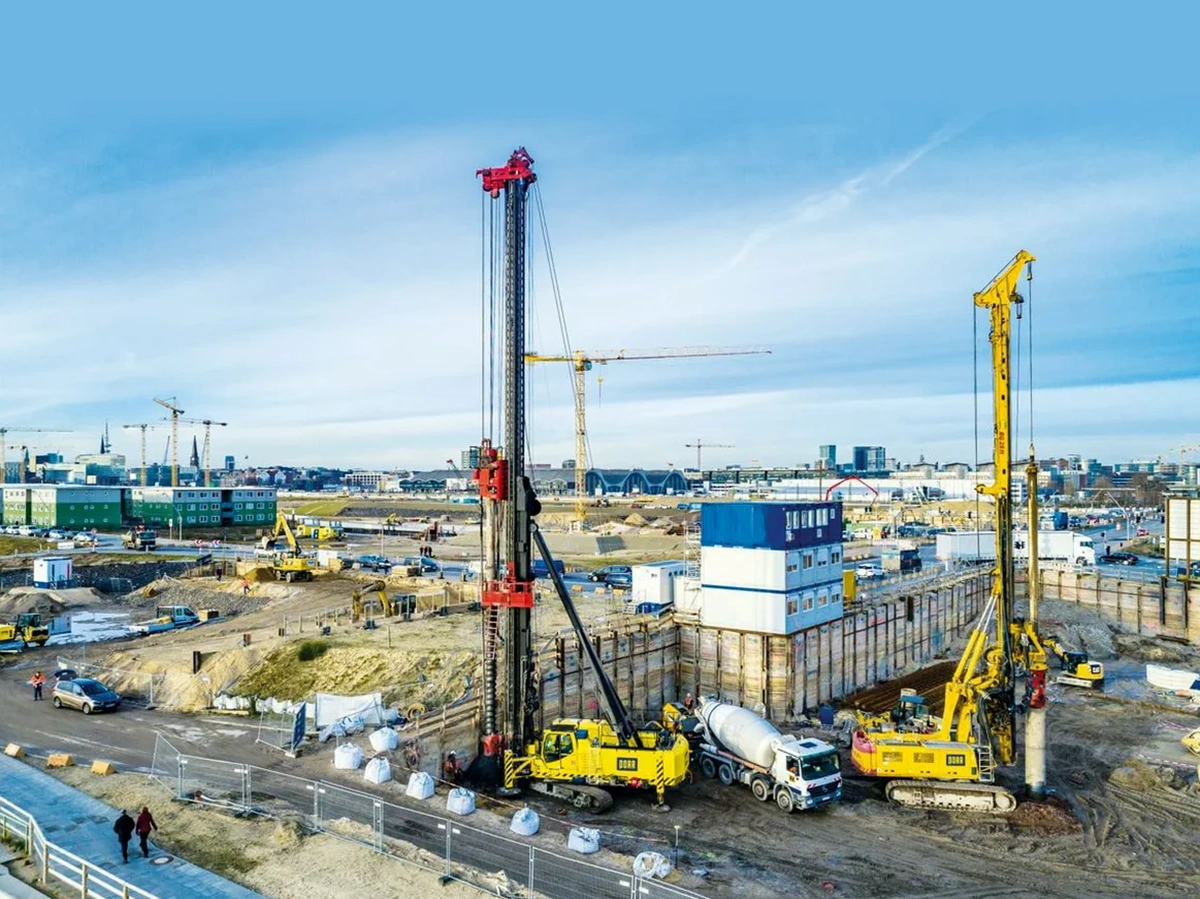
The types of projects requiring comprehensive foundation engineering in Cairns are diverse. High-set tropical homes on challenging sites frequently move beyond standard slabs to require pile foundation design to bypass soft surface strata and anchor into competent material. Multi-storey apartment buildings and hotel resorts along the Esplanade demand deep foundations capable of resisting both vertical settlement and lateral wind and storm surge forces. Infrastructure projects, including bridges over the Barron or Mulgrave Rivers and the expansion of Cairns Airport, rely on large-diameter bored piles and driven piles to manage immense structural loads. Even light industrial sheds often need ground improvement or stiffened raft designs to prevent the pumping effect of reactive clays during the wet-dry seasonal cycle.
Available services
Common questions
Why are foundations in Cairns often more complex than in other Australian cities?
Cairns' foundations are uniquely complex due to widespread soft estuarine clays with low bearing capacity, a very high water table, and the prevalence of acid sulfate soils. These factors, combined with the need to design for cyclonic wind loads and potential flooding, mean that standard, off-the-shelf footing designs are rarely suitable. A detailed geotechnical investigation is almost always essential to develop a safe and durable foundation solution tailored to these aggressive local conditions.
What is the most critical local regulation affecting foundation design in Cairns?
While the National Construction Code and Australian Standards like AS 2870 and AS 2159 are paramount, local council regulations on managing acid sulfate soils are equally critical. Disturbing these soils without an approved management plan can lead to severe environmental harm and structural concrete degradation. This regulation directly impacts excavation methods, concrete mix design with sulfate-resistant cement, and the overall durability strategy for all foundation elements in affected areas.
How do I know if my site needs a deep pile foundation instead of a standard slab?
The decision is based on a site-specific geotechnical investigation. If boreholes reveal soft, compressible clays extending beyond a depth of 1.5 to 2 metres, or if the bearing capacity at shallow depth is insufficient for the structural loads, a deep pile foundation will likely be required. Piling is also necessary on steeply sloping blocks or in areas with high lateral wind loads where a slab's edge heave and settlement would be uncontrollable.
What are the typical signs of a failing foundation in the Cairns region?
Common signs include sticking doors and windows, diagonal cracking propagating from the corners of openings in brick or rendered walls, and noticeable sloping or unevenness in floor slabs. In Cairns, these issues are often driven by reactive clay movement during extreme wet and dry seasons, or by settlement of soft soils under load. External signs can include separation of steps from the building or visible cracks in the foundation stem wall itself, all of which warrant immediate professional assessment.