Ground improvement in Cairns encompasses a suite of geotechnical techniques designed to enhance the engineering properties of soil and fill materials, ensuring they can safely support structures, roads, and infrastructure. In a region where soft, compressible soils and variable subsurface conditions are common, these methods are not merely optional—they are fundamental to the viability and longevity of construction projects. The category covers everything from densification and reinforcement to drainage and chemical stabilisation, tailored to the specific challenges of tropical North Queensland. For developers and engineers, understanding and applying the right improvement strategy is critical to mitigating settlement, increasing bearing capacity, and reducing liquefaction risk in this seismically moderate zone.
Cairns sits on a coastal plain flanked by the Great Dividing Range, with much of the urban area underlain by Quaternary alluvial deposits, estuarine clays, and loose sandy silts. These sediments, often saturated due to high rainfall and tidal influence, can exhibit low shear strength and high compressibility. The region's geology includes ancient metamorphic rocks of the Hodgkinson Province, but the immediate subsurface in many development areas is dominated by younger, unconsolidated materials. This juxtaposition creates a landscape where deep foundations or ground improvement are routinely necessary. Tropical cyclones and monsoonal rains further complicate the picture by raising groundwater tables and increasing the potential for soil instability, making robust ground improvement a non-negotiable part of the design process.
Australian practice for ground improvement is governed by a framework of standards, most notably AS 2159-2009 for piling design and installation, and AS 4678-2002 for earth-retaining structures, which frequently reference improved ground parameters. The National Construction Code (NCC) adopts these standards, and local councils in Queensland, including Cairns Regional Council, enforce compliance through their planning schemes and development approvals. Geotechnical investigations must align with AS 1726-2017, providing the soil data that feeds into improvement designs. For dynamic methods like vibrocompaction design, practitioners also reference international guidelines from bodies like the Deep Foundations Institute, adapting them to local conditions. Adherence to these norms ensures that improved ground meets performance criteria for serviceability and ultimate limit states.
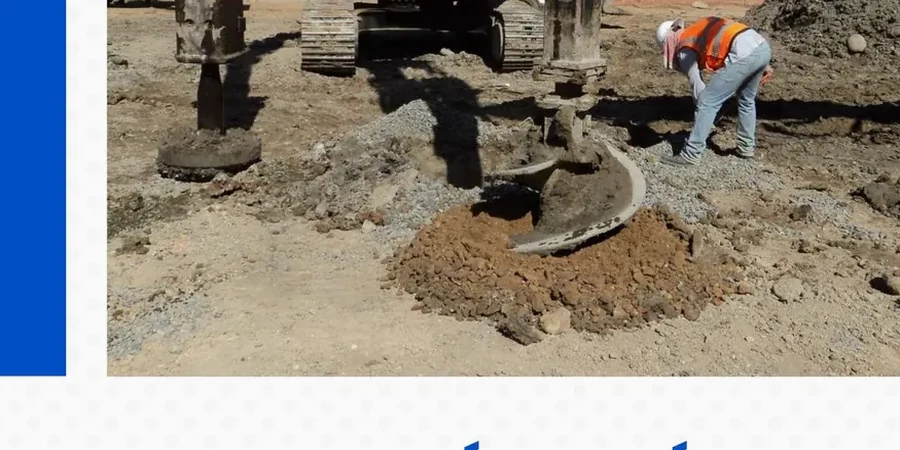
The types of projects that demand ground improvement in Cairns are diverse, ranging from residential subdivisions on reclaimed land to major infrastructure like the Cairns Airport expansion and port facilities. Commercial buildings in the CBD often require solutions to deal with buried paleochannels or soft marine clays, while industrial developments on the southern growth corridor may encounter loose sands needing densification. Techniques such as stone column design are frequently employed to support embankments and slab-on-grade foundations, offering both reinforcement and drainage. Road and bridge approaches across the Barron River floodplain also benefit from ground improvement to minimise post-construction settlement. In each case, the selection of method depends on the soil profile, loading requirements, and environmental constraints, with designs often verified by post-treatment testing like cone penetration tests.
Available services
Common questions
What is ground improvement and why is it needed in Cairns?
Ground improvement refers to the modification of soil properties to increase strength, reduce compressibility, or mitigate liquefaction. In Cairns, it is essential due to widespread soft clays, loose alluvial sands, and high groundwater tables, which can cause excessive settlement and instability under structural loads. Proper improvement ensures long-term performance and compliance with Australian standards.
How do I know if my Cairns site requires ground improvement?
A comprehensive geotechnical investigation following AS 1726-2017 is the first step. Indicators include low Standard Penetration Test (SPT) N-values, soft clay layers, or loose sand lenses. If the bearing capacity is insufficient or predicted settlement exceeds tolerable limits for your structure, ground improvement or deep foundations will be necessary to meet NCC and local council requirements.
What are the most common ground improvement techniques used in the Cairns region?
Common methods include vibrocompaction for granular soils, stone columns for cohesive and mixed soils, and dynamic compaction for fills. Vibro-replacement and rigid inclusions are also used where higher loads exist. The choice depends on the soil profile, depth of treatment, and project loads, with designs often referencing AS 4678 and international practice guidelines.
How does ground improvement compare to piling for residential and commercial projects?
Ground improvement often provides a more economical solution by treating the soil mass rather than bypassing it, allowing for shallow foundations. It can reduce concrete and steel use while offering similar settlement control. However, very deep soft soils or extremely high loads may still require piling. A geotechnical engineer can advise on the most suitable approach for Cairns conditions.