Between the alluvial flats of the Barron River delta and the deeply weathered metasediments of the Whitfield Range, the mechanical behaviour of the ground in Cairns shifts within a few hundred metres. A footing designed for the moderately cemented clayey sands of Portsmith will perform very differently if transposed to the residual clay profile of Edge Hill, where the soil structure retains relict joints from the parent Barron River Metamorphics. Our test pits programme in the northern beaches corridor has repeatedly shown that ignoring this spatial variability—even across a single residential lot—leads to differential settlement claims within the first two wet seasons. The soil mechanics study we deliver in Cairns quantifies shear strength, compressibility and permeability across these transitions, giving the structural engineer a continuous subsurface model rather than isolated borehole logs. Rainfall in the region exceeds 2000 mm annually, and the groundwater table in suburbs like Holloways Beach sits less than 1.5 m below ground for much of the summer monsoon, which makes effective stress analysis and drained parameter selection non-negotiable for any permanent works design.
Tropical residual soils in Cairns can lose over 60% of their apparent cohesion upon saturation—drained parameters are the only reliable basis for permanent works design.
Service characteristics in Cairns
Typical technical challenges in Cairns
A twelve-storey mixed-use development on a site along Lake Street in the Cairns CBD encountered a lens of soft estuarine clay at 7 m depth that had not been identified in the preliminary desktop study. The structural engineer had assumed a bearing stratum at 5 m based on nearby borelogs, but the lens—deposited in a former tidal channel of Trinity Inlet—extended to 11 m and exhibited undrained shear strengths below 30 kPa. Without a targeted soil mechanics study incorporating cpt testing to map the lens continuity, the piled foundation would have been terminated too short, risking block settlement of the entire eastern wing. The solution required extending the bored piles an additional 6 m into the underlying decomposed schist and revising the pile-toe grouting specification to manage the artesian conditions encountered at the rockhead interface. In Cairns, the combination of paleochannel deposits, high seasonal groundwater and cyclonic lateral loads means that geotechnical surprises are rarely forgiving. A soil mechanics investigation that stops at index testing and generic bearing capacity equations leaves the project exposed to exactly this type of late-stage redesign cost.
Our services
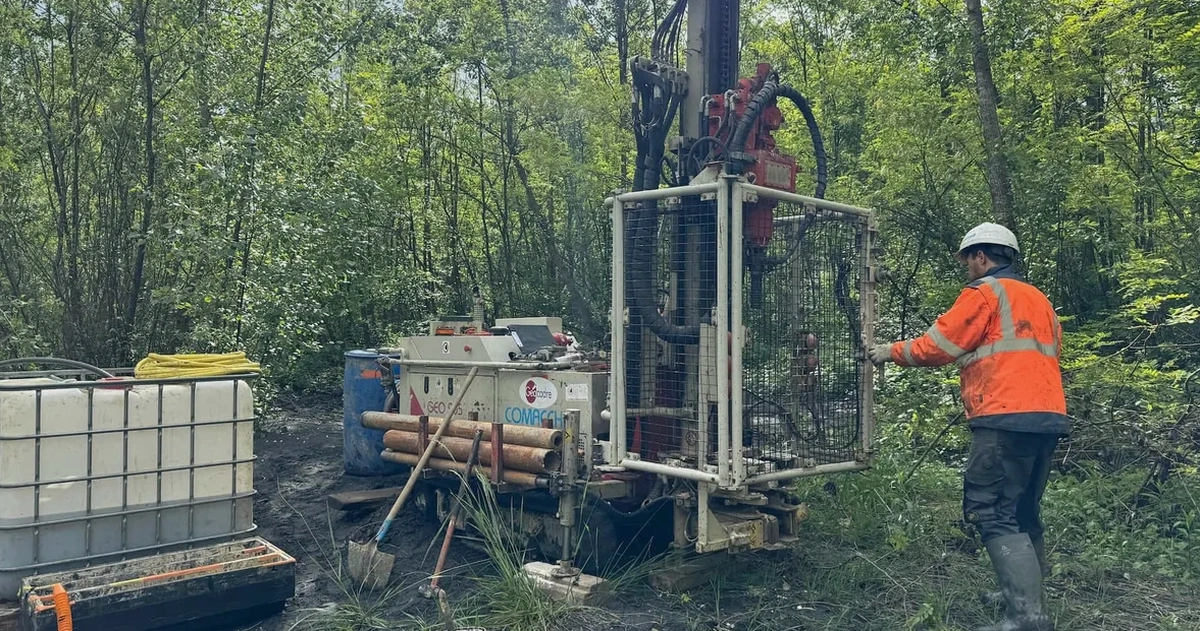
A complete soil mechanics study in Cairns integrates field investigation, laboratory testing and engineering analysis to produce a ground model that accounts for the tropical weathering profile, seasonal groundwater fluctuation and the specific load paths imposed by cyclonic wind and seismic action. The two core service components we deliver across the region are described below.
Laboratory Testing Programme for Soil Mechanics
Testing is performed in our NATA-accredited laboratory (ISO/IEC 17025) and includes consolidated-undrained triaxial compression with pore pressure measurement, direct shear on undisturbed samples from the residual zone, one-dimensional consolidation, Atterberg limits, particle size distribution by sieve and hydrometer, soil suction measurement using filter paper and dew-point methods, and chemical aggressivity profiling per AS 2159. Each test schedule is designed around the specific weathering horizon encountered in the borehole, not a generic checklist.
Foundation Analysis and Geotechnical Reporting
The report synthesises field logs, laboratory data and analytical models into a design-basis document covering bearing capacity (general and local shear failure modes), total and differential settlement under serviceability loads, pile capacity in weathered rock profiles, lateral earth pressure coefficients for retaining structures, and soil-structure interaction parameters for mat foundations. Cyclonic wind load cases per AS/NZS 1170.2 are explicitly addressed in the foundation design recommendations.
Q&A
How much does a soil mechanics study cost for a residential building project in Cairns?
For a typical single-dwelling residential site in the Cairns region, a soil mechanics study including two to three boreholes, laboratory classification and consolidation testing, plus a design report compliant with AS 1726, generally falls in the range of AU$5.370 to AU$6.940. The final figure depends on access conditions, depth to rock and the number of samples requiring triaxial testing.
What distinguishes a soil mechanics study in Cairns from the same investigation in southern Australian cities?
The tropical weathering profile is the defining difference. In Cairns the transition from weathered rock to residual soil is compressed, groundwater is persistently high during the wet season, and the soils exhibit suction-dependent apparent cohesion that disappears upon saturation. Our investigation protocol therefore emphasises saturated strength testing and close-spaced sampling across the weathering front, which is less critical in temperate regions where the profile is more gradual.
How long does a full soil mechanics investigation take from mobilisation to final report?
Fieldwork typically requires three to five days on site for a standard residential or light commercial investigation in Cairns, depending on the number of boreholes and access constraints. Laboratory testing adds two to three weeks for consolidation and triaxial programmes. The geotechnical report with foundation recommendations is normally delivered within four weeks of site completion, though fast-track reporting can be arranged for urgent projects.