A developer we worked with near the Barron River delta had a site where the top six metres were basically mangrove mud. You could push a rod in by hand. For a three-storey apartment block on that kind of profile, conventional footings were a non-starter. The solution came down to Improvement, and stone columns ended up making the most sense when you factor in the whole-of-life settlement performance compared to piling. In Cairns, where the coastal plain is underlain by deep Holocene alluvium, stone column design is rarely a cookie-cutter exercise — each job needs to be tuned to the specific stratigraphy and the structural demands coming from the project above.
In the soft estuarine clays of the Cairns coastal plain, stone columns shift the failure mode from bearing to bulging — and that changes the entire foundation economy.
Service characteristics in Cairns
Typical technical challenges in Cairns
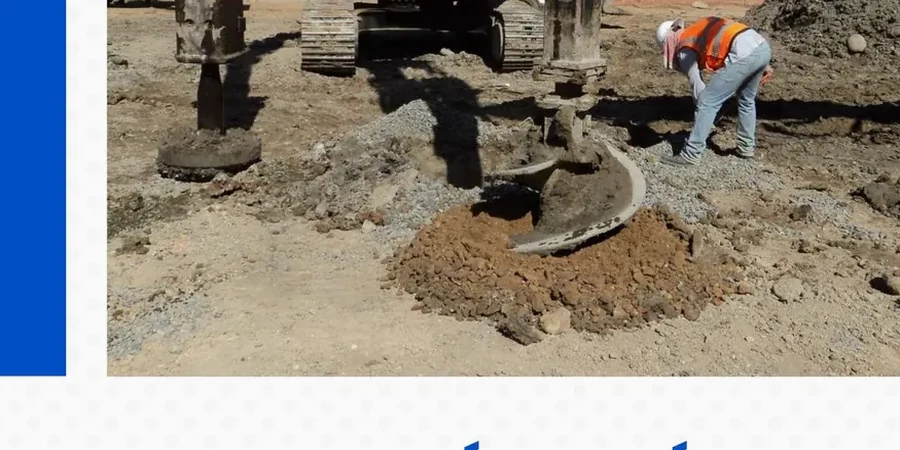
The rig we mobilise for Cairns jobs is a vibroflot suspended from a crawler crane, typically running at 130–180 kW. The probe goes in under its own weight plus vibration and water flush, and that’s where the local risk sits: if the clay has high sensitivity, the vibration can remould the soil around the column, temporarily dropping its strength before the gravel locks in. We’ve seen this in the low-lying suburbs south of the city centre, where the clays are borderline quick. The design has to account for that installation disturbance window — column sequencing, spacing, and the pause time between adjacent installations all become part of the specification. Skip that detail, and you get columns that look fine on paper but perform poorly under load.
Our services
Our Improvement scope in Cairns covers the full design-to-verification cycle for stone column projects. Everything stays in-house.
Stone Column Design Package
Full design report covering column layout, gravel specification, predicted settlement under service loads, and construction sequencing. Includes finite element analysis for complex stratigraphies and compliance documentation to AS 4678.
Post-Installation Verification Testing
Plate load tests on individual columns and groups, combined with CPT profiling through the improved zone, to confirm the treated ground meets the design bearing capacity and settlement criteria before structural works begin.
Q&A
How much does stone column design cost for a typical Cairns project?
For a standard residential or low-rise commercial site in Cairns, the engineering design package generally falls between AU$2,100 and AU$8,210. The spread depends on the number of columns, the depth of treatment, and whether finite element modelling is required for complex layering. We provide a fixed-fee proposal after reviewing the geotechnical report and structural loads.
What soil conditions in Cairns make stone columns a good choice?
Stone columns work well in the soft estuarine clays and silts found across much of the Cairns coastal plain, particularly where the undrained shear strength is above 10–15 kPa. They are less suitable for very sensitive clays that lose significant strength during vibration, or for sites where the fill layer contains large obstructions that would deflect the vibroflot.
How long does the design process take from investigation to final drawings?
Once we have the CPT and borehole data, a typical stone column design for a Cairns project takes two to three weeks to complete the analysis, run settlement checks, and issue the signed design report and installation specification.
Do you handle both the design and the installation?
We provide the engineering design and can manage the installation through trusted Improvement contractors in North Queensland. The design package includes all the construction specifications and quality control hold points, so the contractor works to our documented requirements.
What verification is needed after the stone columns are installed?
Standard verification in Cairns involves a combination of plate load testing on a representative sample of columns and post-treatment CPTs through the column and between columns. We specify the testing frequency in the design — typically one plate test per 20–30 columns and CPTs at key locations identified during the design phase.