Roadway engineering in Cairns encompasses the full spectrum of planning, analysis, design, and construction of road pavements and subgrade systems tailored to the unique demands of Far North Queensland. This category covers both flexible and rigid pavement solutions, subgrade evaluation, and the geotechnical investigations that underpin durable road infrastructure. In a region characterised by tropical rainfall, reactive clay soils, and proximity to environmentally sensitive areas like the Great Barrier Reef, robust roadway design is not just a convenience—it is a critical component of public safety, economic connectivity, and disaster resilience. Engineers and asset managers rely on comprehensive roadway services to ensure that highways, local streets, and industrial access roads perform reliably under extreme wet-dry cycles and heavy traffic loads.
The local geology of Cairns presents distinct challenges that shape every roadway project. Much of the coastal plain is underlain by alluvial clays, silts, and loose sands, often with high groundwater tables during the wet season. These materials can exhibit low bearing capacity and significant volume change with moisture fluctuation, making a thorough CBR study for road design essential before any pavement design commences. Inland areas transition to residual soils derived from basalt and metamorphic rocks, which may contain boulders or variable weathering profiles. Understanding these subsurface conditions through targeted geotechnical investigation is the first step in mitigating risks such as differential settlement, pavement rutting, and premature failure.
Australian roadway design is governed by the Austroads Guide to Pavement Technology, which provides the national framework, supplemented by Queensland-specific standards from the Department of Transport and Main Roads (TMR). Key documents include the TMR Pavement Design Manual and Technical Specifications MRTS series, which set out requirements for materials, compaction, and testing. These standards mandate procedures for subgrade evaluation, including soaked CBR testing under worst-case moisture scenarios, and prescribe structural design methods for both granular and bound pavements. Compliance with these regulations ensures that road assets meet design life targets and perform under the region's monsoonal climate, where annual rainfall can exceed 2,000 mm.
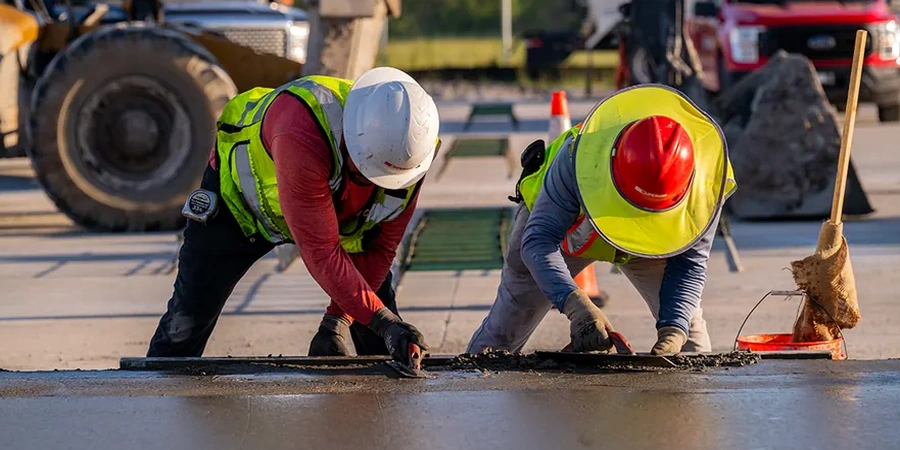
Roadway services are required across a diverse range of project types in Cairns. Greenfield residential subdivisions demand flexible pavement design that can accommodate staged construction and future service trenching, while arterial roads and bus routes often justify rigid pavement design for higher durability and lower maintenance in high-stress locations. Industrial estates, port access roads, and sugarcane transport routes present heavy axle loading scenarios that push pavement materials to their limits. Each application requires a nuanced approach to layer thickness, material selection, and drainage design, always starting from a sound understanding of the natural ground. The integration of recycled materials and stabilisation techniques is also growing, driven by TMR sustainability initiatives.
Common questions
What are the main differences between flexible and rigid pavement design in a tropical environment like Cairns?
Flexible pavements distribute loads through granular layers and are more tolerant of minor subgrade movement, making them common for residential streets, but they require robust drainage to prevent water-induced weakening. Rigid pavements use concrete slabs that spread loads over a wider area and resist deformation under high axle loads, but they demand very stable subgrades and careful joint design to manage thermal and moisture expansion in Cairns' hot, wet climate.
Why is a CBR study critical before designing a road in the Cairns region?
A soaked California Bearing Ratio test simulates the worst-case saturated condition of the subgrade during the prolonged wet season. Given Cairns' expansive clays and high water tables, designing without this data risks severe under-design, leading to rutting, shear failure, and costly premature rehabilitation. It directly determines the required pavement thickness in accordance with the Austroads and TMR design procedures.
How do local soil conditions in Cairns affect roadway construction costs and methods?
Local soils often include soft alluvium and reactive clays that require treatment such as lime stabilisation, excavation and replacement, or geosynthetic reinforcement. These necessary interventions increase initial costs but are essential to prevent long-term pavement distress. Site-specific investigation is the only way to quantify these needs accurately and avoid either over-expenditure on unnecessary treatments or under-design leading to early failure.
What Queensland standards apply to the structural design of road pavements?
The Department of Transport and Main Roads' Pavement Design Manual is the primary reference, working alongside the Austroads Guide to Pavement Technology. TMR Technical Specifications MRTS05 (Unbound Pavements), MRTS09 (Plant-Mixed Stabilised Pavements), and MRTS39 (Lean Mix Concrete Sub-base) define material and construction requirements that designers must follow for all public roads and many private developments in Queensland.